
Chimney Flashing Replacement
The junction between roof and chimney is a common leak point. We fabricate and install custom step and apron flashings that shed water effectively and withstand Wellington's harsh weather.
Many older homes still have their original brick chimneys, even though the fireplaces below have not been lit in years, and keeping them watertight is what chimney flashing and repairs in Wellington come down to. The junction between a chimney and the roof is one of the hardest to seal: the chimney is masonry, the roof is metal or tile, they move differently, and water arrives from the slope above. Ageing flashings and crumbling mortar make chimneys a frequent source of leaks.
There is a second reason to pay attention. Unreinforced brick chimneys are vulnerable in earthquakes, and when they fall they can come through the roof or land on a path or driveway. If your chimney is redundant, taking it down below the roofline and roofing over the gap removes both the leak risk and the seismic hazard. If you want to keep it, proper flashings and repairs will keep it dry.
The junction between roof and chimney is a common leak point. We fabricate and install custom step and apron flashings that shed water effectively and withstand Wellington's harsh weather.
Cracked crowns and missing caps allow water into your chimney structure. We repair and seal them, preventing deterioration and protecting the masonry, flue and ceilings below from moisture damage.
If you no longer use your chimney, we can remove it and rebuild the roof section cleanly, eliminating a leak risk and giving you extra usable space, from a local team.
A chimney needs a set of flashings working together, each dealing with water from a different direction. When one piece is missing or badly made, the others cannot make up for it.
On the uphill side of the chimney, a back tray or saddle diverts water around both sides instead of letting it pond against the brickwork. Many older chimneys have none, which is why they leak.
Along each side, flashings run up the brickwork and under the roofing, so water running down the slope stays on the roof surface instead of finding its way inside.
A counter flashing is let into a mortar joint in the brickwork and folds down over the side flashings, covering their top edge so rain cannot run in behind.
On the downhill face, an apron flashing carries water off the front of the chimney and back onto the roof below, with enough cover to resist wind-driven rain.
The corners where the side flashings meet the back tray and front apron are where many chimney details fail. They need folded, properly lapped and riveted joins rather than a smear of sealant.
On metal roofs, flashings that cross the ribs are notched or fitted with closures to match the profile. On tile roofs, they are dressed over the tiles so wind cannot drive rain underneath.
Flashings are only part of the story. Water also gets in through the chimney itself: cracked or eroded mortar joints, a crumbling cap, or an open flue that collects rain. If the fireplace is no longer used, capping the flue with a vented cap keeps water out while letting the stack breathe.
We repair and replace chimney flashings, re-point loose mortar at the flashing line, and replace old sealant patches with proper mechanical details, following the same principles as our flashing installation and repair work. Where the brickwork itself is cracked, loose or leaning, that is beyond a flashing repair, and removal is usually the better option.
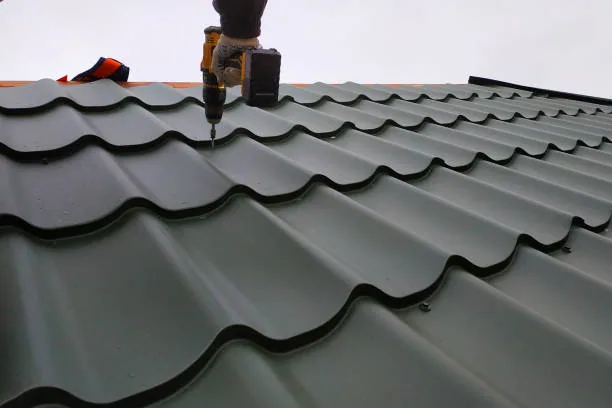
A redundant brick chimney can be taken down to below the roofline, often to ceiling level, and the roof closed over as if the chimney had never been there. Bricks come off by hand from the top down and are lowered safely, the opening in the roof is framed in, and new roofing is laid across the gap with underlay and matching flashings.
On a metal roof, this usually means replacing the sheets on that slope so there are no patched joins. On older iron it can be the trigger for re-sheeting the whole roof. How the remaining base is secured depends on the house, and if consent is needed we'll confirm with council. In character or heritage areas, district plan rules may also apply to chimneys visible from the street, so it is worth checking early.
Some chimney problems show up inside the house first, so check the rooms around the fireplace as well as the roof.
Damp patches on the wall or ceiling around the fireplace, especially after rain from one particular direction, usually trace back to the flashings or the stack itself.
Bricks or mortar fragments on the roof or in the spouting mean the stack is breaking down. That is both a leak risk and a falling hazard for anyone below.
Corroded, lifted or sealant-smeared flashings around the base show the details are failing. Layers of silicone are usually a sign of past leaks that were never properly fixed.
A chimney that leans, or has a crack running through the brickwork, may have been damaged in past earthquakes. Have it assessed before anyone works on or near it.
A damp, sooty smell from an unused fireplace, or water marks inside the firebox, usually means rain is getting down the open flue or soaking through the stack.
Green growth, white salty deposits or dark damp patches on the brickwork show the stack is staying wet. Wet brick and mortar break down faster, especially on the side facing the weather.
The junction between a chimney and your roof is one of the most common leak points on any house. Our specialists fabricate custom step and apron flashings that fit your chimney precisely and shed water the way they should, even in Wellington's strongest storms. We also inspect and repair cracked crowns, missing caps and deteriorating mortar, because water damage inside a chimney can spread quietly to ceilings and walls below. If you no longer use your chimney, we can remove it and rebuild the roof section cleanly, eliminating a leak risk for good. Our work is neat, secure and thoroughly checked before we leave. Get in touch today.
Chimney work often reveals other issues on an older roof. These related services cover what usually comes up alongside it.
Call our team if you need advice for your property or roofing project.
04 888 0115If the fireplace is no longer used and the chimney is unreinforced brick, removal is well worth considering. It takes away a common leak point and reduces the risk of bricks falling in an earthquake. If you want to keep the chimney for character or for a working fire, it may need strengthening, and the flashings should be renewed.
We frame in the opening and roof over it with new material, but on a metal roof we usually replace whole sheets from ridge to spouting rather than inserting a patch. That avoids end laps and joins in the middle of the slope, which are prone to leaking in Wellington's wind-driven rain.
It depends on how much of the chimney is removed, whether structural elements are affected, and the district plan rules for your property. Requirements vary from house to house, so we'll confirm with council before starting, and you will know where you stand before any bricks come down.
Chimney leaks often depend on wind direction. Rain driven against one face gets behind a failed counter flashing or soaks through porous mortar, while rain from other directions does not. A missing back tray causes leaks in heavy rain coming down the slope. Roof leak detection pinpoints which detail is letting water in.
Sometimes. Counter flashings and front aprons can often be replaced on their own. Fitting a proper back tray, or replacing side flashings that run under the roofing, usually means lifting the sheets or tiles around the chimney. For simpler faults, our general roof repairs service may be all you need.
Experience a top-notch roofing services wherever you are in Wellington. Get in touch with our team and will come back with you a free, no-obligation estimate for any roofing service.