
Membrane Waterproofing
We apply liquid and sheet membranes to roofs, decks and balconies, creating a continuous waterproof barrier that prevents moisture from reaching the structure below, even during prolonged heavy rain.
Roof waterproofing in Wellington keeps water out where a normal roof cladding cannot: decks built over bedrooms and garages, balconies, parapet walls, internal gutters, roof terraces and the junctions between them. These areas are flat or nearly flat, often walked on, and usually tucked against walls and doors, so they rely on a continuous waterproof layer and careful detailing rather than overlapping sheets.
Wellington has plenty of them, from 1990s and early 2000s homes with flat decks and parapets, to modern townhouses with roof terraces, to older houses with a deck added over a room below. They face driving rain and wind pressure that pushes water into any gap. When a waterproofing detail fails, the damage usually shows up inside, and it can spread a long way before anyone sees it.
We apply liquid and sheet membranes to roofs, decks and balconies, creating a continuous waterproof barrier that prevents moisture from reaching the structure below, even during prolonged heavy rain.
Corners, upstands, penetrations and drainage outlets are where failures begin. We pay close attention to these details, using reinforced systems that remain flexible and durable over time, from day one.
Our waterproofing work follows manufacturer specifications and industry standards, providing you with documented guarantees and peace of mind that your roof will perform as intended, by an experienced local team.
There are two main ways to create the waterproof layer. Sheet membranes, such as butyl rubber, EPDM, TPO and PVC, come in rolls that are bonded to the substrate and joined at seams. Liquid-applied systems, typically polyurethane or acrylic based, are brushed, rolled or sprayed on in coats, with reinforcing fabric at corners and joints, and cure into a seamless skin.
Sheet membranes give a consistent, factory-controlled thickness and are well proven on larger areas. Liquid systems shine on awkward shapes, around many penetrations, and on upstands and detail work where sheets are fiddly. Some jobs use both. If you are weighing up a whole low-slope roof rather than a deck or a detail, our flat roofing and membrane roofing pages cover roof-scale choices.
These are the details we are most often called to fix, and the ones Building Code clause E2 (External Moisture) treats as higher risk.
A deck above a bedroom or garage is effectively a flat roof that people walk on. It needs a sound plywood substrate, falls to an outlet, an overflow, and a membrane protected from foot traffic, often by tiles or a slatted deck on top.
Where a deck meets a door, the membrane must run up under the joinery with enough height to stop water backing up in a storm. Low thresholds are one of the most common causes of water getting into the room inside.
The top of a parapet should never be flat. It needs a capping that slopes to shed water and is fixed without puncturing the top surface, plus saddle flashings where the parapet meets a wall.
Solid, clad balustrades around decks were common on homes built in the 1990s and early 2000s. Water gets in through the top and fixings, and the framing inside can rot unseen. Many need rebuilding with a sloping cap and proper flashings.
Posts bolted down through a deck membrane put holes straight through the waterproof layer. Side-fixing to the edge framing, or properly flashed post bases, keeps the membrane continuous so it is not relying on sealant around every bolt.
Every enclosed deck or roof area needs an outlet sized for the area and a separate overflow, so a single blocked outlet cannot flood the deck and spill indoors. Missing overflows are a frequent cause of serious leaks.
When an existing deck or parapet leaks, we start by finding out how far the water has gone. That can mean moisture readings on surrounding linings, opening up a small section, and checking the substrate. A membrane patch over rotten plywood will fail again, so we price the job on what we find, and tell you if a builder needs to be involved for framing repairs.
Wellington's seismic movement adds another stress. Membranes laid over plywood can split along sheet joints where the substrate has moved, and rigid junctions at walls can crack. Good detailing allows for that movement with bond-breakers and flexible upstands rather than relying on a tight, rigid seal.
Repairing or replacing waterproofing on a deck over a living space, or rebuilding a parapet or balustrade, may need building consent, especially if the design changes. We'll confirm with council before work starts, and for new work we follow the consented drawings and the membrane manufacturer's installation details.
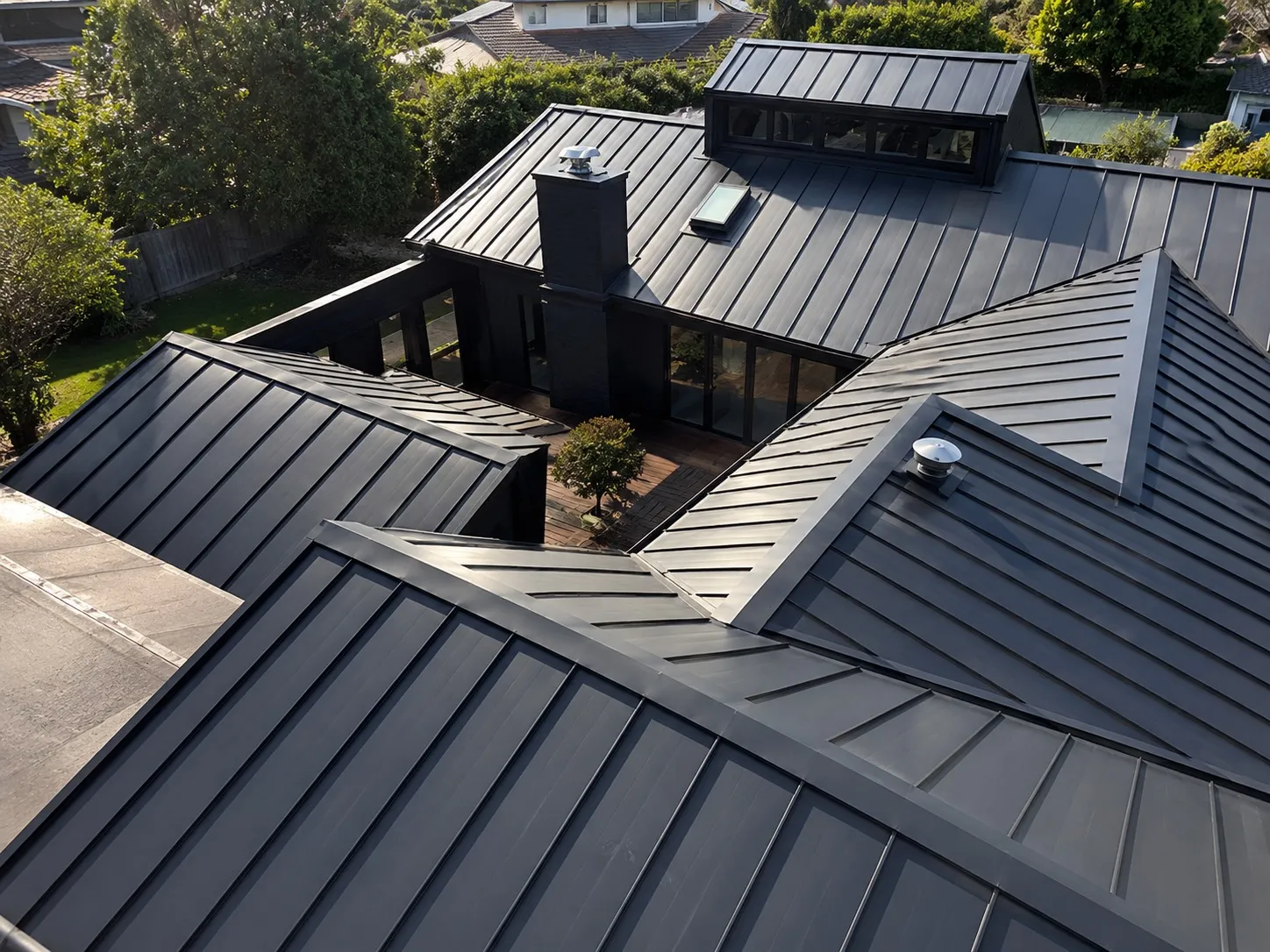
Waterproofing succeeds or fails on the details, and our contractors give those details the attention they deserve. Corners, upstands, penetrations and drainage outlets are where most failures begin, so we reinforce each of them with the right materials and techniques. We work with proven liquid and sheet membrane systems, installed strictly to manufacturer specifications and tested where appropriate. Whether you need a roof, deck or balcony protected, we plan falls and drainage so water leaves quickly instead of sitting and seeking a way in. You receive clear documentation and honest advice about maintenance, so your waterproofing keeps performing long after we have packed up and left. Contact our local team today.
These services cover the roof types, gutters and flashing details that most often sit alongside deck, balcony and parapet waterproofing work.
Call our team if you need advice for your property or roofing project.
04 888 0115Clause E2 of the New Zealand Building Code covers external moisture: buildings must stop water from outside getting in and causing damage. Its acceptable solution sets out details for membranes, falls, upstands, thresholds and parapets. Decks over living spaces are treated as higher risk, which is why detailing matters so much, and why designs outside the standard details often need specific design work as part of the consent.
Sometimes, if the leak is at an edge, an outlet or the threshold and can be reached without lifting the surface. But tiles laid over a membrane often hide the real problem, and if the membrane itself has failed across the deck, the tiles have to come up so it can be replaced. We assess first and explain what can and cannot be done from the edges.
Both can perform well when the right system is used and applied properly. Liquid systems are seamless and good for complex shapes and upstands, but their thickness depends on careful application. Sheet membranes give a controlled thickness and are well proven on larger areas. The right choice depends on the shape, use and exposure of the area, and on the substrate beneath.
Parapets are exposed on three sides, and many were built with flat tops, cappings fixed through the top surface, or no saddle flashing where they meet a higher wall. Wind-driven rain pushes into those gaps and runs down inside the framing. Fixing a leaking parapet usually means re-detailing the capping and junctions properly rather than adding more sealant.
Yes. Internal and box gutters sit inside the building line, so any leak goes straight into the structure. They need a durable lining, enough fall, correctly sized outlets and an overflow that discharges somewhere visible. Relining with a membrane or replacing the gutter is often part of a waterproofing job on older commercial buildings and flat-roofed homes.
Experience a top-notch roofing services wherever you are in Wellington. Get in touch with our team and will come back with you a free, no-obligation estimate for any roofing service.