
Ridge Cap Replacement
Damaged or loose ridge capping lets wind and rain into your roof space. We replace cracked and displaced caps with matching pieces, securing them properly against Wellington's strong gusts.

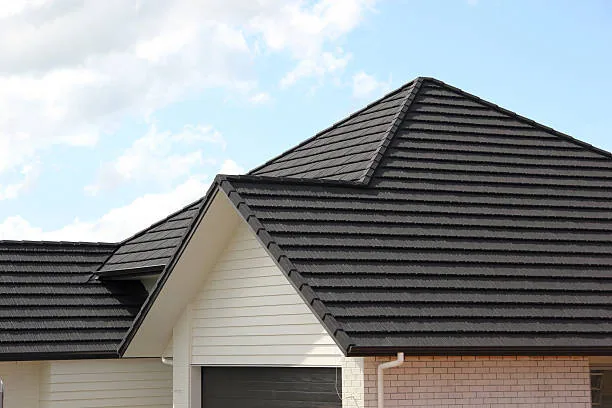
The ridge is where two roof slopes meet, and on most houses it is the most exposed line on the building, so ridge capping, re-bedding and re-pointing in Wellington is about keeping that line sealed. On a tiled roof, curved ridge caps sit over the join, held by a bed of mortar and sealed along the edges with pointing. On a metal roof, a folded ridge cap or ridge roll covers the gap. Either way, if the ridge fails, water gets in at the highest point and runs down inside the roof.
Wellington is hard on ridges. Strong winds pull at the caps, horizontal rain gets driven in underneath them, and every earthquake flexes the roof and cracks rigid mortar. We see plenty of concrete and terracotta tile roofs on 1960s–80s homes where the original bedding has crumbled and the caps are held on by little more than their own weight. Re-bedding and re-pointing put that right without replacing the whole roof.
Damaged or loose ridge capping lets wind and rain into your roof space. We replace cracked and displaced caps with matching pieces, securing them properly against Wellington's strong gusts.
Old mortar crumbles and ridge tiles shift over time. We remove the failed bedding and relay tiles in fresh mortar, restoring a solid, weatherproof seal along every ridge and hip.
We re-point with flexible pointing compounds that move with the roof and resist cracking, giving long-lasting protection and a neat finish that improves your roof's appearance, to a high standard.
Traditional tile ridges were set in a sand and cement mortar bed, then pointed with a richer mortar to close the edges. Mortar is cheap and strong in compression, but it is rigid. As the roof moves with wind, temperature and seismic activity, the mortar cracks, lets water in behind, and eventually breaks away in chunks that end up in the spouting.
Flexible pointing compounds are now widely used as the finishing layer over a mortar bed, and some ridge systems replace most of the mortar with mechanical fixings. These compounds stay slightly elastic, so they move with the roof instead of cracking, and they come in colours to suit common tiles. We choose the method to suit the tile type, the condition of the roof and how exposed the ridge is.

Ridge problems are easy to miss from the ground, so it helps to know what to look for, both outside and inside the house.
Hairline cracks along the edges of the ridge caps are the first stage. Once pieces drop out, rain can be driven straight into the bedding and through to the roof space.
If a cap moves when pushed, the bedding underneath has failed. Loose caps can lift off in a strong northerly and break tiles on the way down, which is a safety hazard as well as a leak.
Sandy grit or lumps of mortar in the gutters below a ridge or hip usually mean the bedding is breaking up. Left alone, it also blocks outlets and downpipes.
Damp marks running along the ceiling under a ridge or hip often trace back to the ridge rather than the tiles. Water travels along battens before it shows, so the stain may be some distance from the fault.
Moss growing along the edges of the caps, often on the shaded south side, holds moisture against the pointing and pushes into cracks as it grows. Heavy growth can hide pointing that has already failed.
Stand back and sight along the ridge from the street. Caps that have dropped, twisted or opened up gaps at the joins show the bedding has shifted, often after an earthquake or years of wind load.
Re-bedding is slow, careful work at the very top of the roof, so access and safety come first. On steep or two-storey roofs we set up edge protection or scaffolding before anyone goes up.
Ridge and hip caps are removed carefully and stacked. Most can be reused, and any cracked caps are replaced with matching ones where they are still available.
Old mortar is chipped off the tiles so the new bed sits on a clean surface. Loose or broken tiles near the ridge are swapped out while the area is open.
A string line is run along the ridge so the caps go back straight and evenly spaced. Caps at the ends and at hip junctions are dry-fitted first to set the spacing.
Caps are set back on a fresh bed and, where the system calls for it, fixed mechanically with clips or screws so they do not rely on mortar alone in high winds.
A flexible pointing compound is tooled along both sides of each cap and across the joins, sealing the ridge while still allowing for movement in the roof.
Mortar dust and chips are swept off the roof and cleared from the spouting and downpipes so they cannot block outlets. We then check the finished ridge from the ground.
Metal roofs use a folded steel ridge cap, often a rounded ridge roll on corrugate or a flat-topped cap on trapezoidal profiles. The cap is fastened through the ribs, and the gap between the sheets and the cap is closed with profiled foam or soft-edge closures. Without closures, wind-driven rain, and sometimes birds, can get under the ridge.
Common faults are fixings that have worked loose, caps too narrow for the exposure, missing closures and corrosion where caps overlap. We can replace a metal ridge cap on its own, or renew it together with the barge and apron details through our flashing installation and repair work. If the sheets themselves are past saving, re-sheeting is the better fix.
Ridge and hip lines take the worst of Wellington's wind, so failing mortar or loose caps quickly let water into your roof space. Our specialists remove deteriorated bedding, relay ridge tiles securely and repoint using flexible compounds that move with the roof instead of cracking. We also replace damaged caps with matching pieces, keeping your roof looking uniform and well cared for. Each repair is checked carefully for secure fixing and weathertightness before we leave. Because we work on tile and metal roofs every week, we recognise problems quickly and fix them properly the first time. It is an affordable repair that prevents far bigger problems later. Get in touch today.
Ridge work is often one item on a broader list of roof jobs. These related services cover the rest of the roof surface and its junctions.
Call our team if you need advice for your property or roofing project.
04 888 0115There is no fixed schedule. It depends on the original materials, how exposed the roof is and how much movement the house has had. Mortar pointing on Wellington roofs commonly cracks well before the tiles wear out. Regular roof inspections will show when the pointing is starting to break down, before it lets water in.
Only if the bedding underneath is still solid. Pointing over loose or crumbling bedding looks tidy for a while, but the caps can still move, and the new pointing cracks along the old failures. We check the bed under each cap and re-bed wherever it has let go.
For most tile roofs, yes, as the finishing layer. Flexible compounds cope with movement from wind and earthquakes far better than rigid mortar, so they are much less prone to cracking. Mortar still has a place as bedding in many systems. We match the approach to your tiles and how exposed the ridge is.
It often is. A full roof restoration on a tile roof usually includes cleaning, replacing broken tiles, re-bedding and re-pointing the ridges and hips, then coating. If the rest of your roof is in good order, ridge work can also be done on its own.
Sometimes. Metal ridge caps can be lifted by wind if they were under-fixed, corrode at the laps, or be missing their closures. If the cap itself is sound, refixing it and adding closures may be enough. If it is rusting or bent, we replace it with a new cap folded to suit your roof profile.
Experience a top-notch roofing services wherever you are in Wellington. Get in touch with our team and will come back with you a free, no-obligation estimate for any roofing service.