
Accurate Leak Tracing
Water often travels far from where it enters. We trace leaks through flashings, penetrations and laps to find the true source rather than guessing and patching the wrong spot.

The hardest part of fixing a roof leak is usually finding it, which is why roof leak detection and repair in Wellington starts with following the water. Water rarely drips straight down from the hole. It gets in at one point, runs along underlay, battens or rafters, and appears somewhere else entirely, sometimes metres away. Patching the spot above the stain is why so many leaks come back, so we trace the path methodically before anything is sealed or replaced.
Wellington adds its own complications. Rain here often arrives sideways, so a roof that stays dry in still rain can leak in a strong southerly. Older homes have had decades of aerials, flues, skylights and add-ons cut through the roof, and every one is a potential entry point. We look at the whole picture, including what the weather was doing when the leak showed up.
Water often travels far from where it enters. We trace leaks through flashings, penetrations and laps to find the true source rather than guessing and patching the wrong spot.
Once located, we repair the cause properly with new flashings, sealants or replacement sheets, so the leak does not return after the next heavy Wellington downpour, with honest practical advice.
Acting early on leaks protects ceilings, insulation and framing from rot and mould. A prompt inspection often costs far less than repairing hidden water damage later, using quality proven materials.
Inside a roof, water follows the easiest route downhill. It can run along the top of the underlay until it reaches a lap or a tear, track along a purlin or batten, or cling to the underside of a sheet before it finally drops. Ceiling insulation soaks it up and spreads it, so the first sign might be a stain at a ceiling join, a damp patch around a downlight, or water running down the inside of a wall.
Not every damp patch is a leak, either. Condensation on the underside of an unlined metal roof, especially over bathrooms and kitchens without good extraction, can drip and stain ceilings on cold mornings. Telling the two apart matters, because sealing the roof will not fix condensation. Our roof ventilation page explains that side of things.
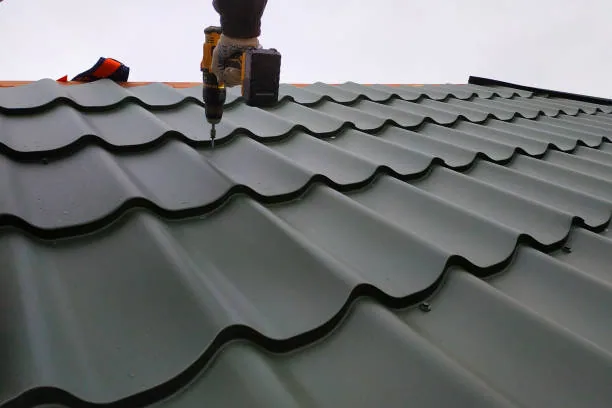
Every leak is different, but we work through the same steps in the same order, so nothing is left to guesswork or a hopeful dab of sealant.
Does it leak in every rain, only in downpours, or only in a particular wind? The answer narrows things quickly. Leaks that appear only in strong northerlies or southerlies point to wind-driven entry at flashings and laps facing that way.
Where access allows, we go into the ceiling space with a torch and look for water tracks, stained timber, wet insulation and daylight around fixings. This shows where water enters the structure, often well uphill of the ceiling stain.
A moisture meter reads dampness in timber, plasterboard and linings without opening them up. Mapping readings across a ceiling or wall helps us follow the path back toward the source and shows how far the damage has spread.
With the likely entry zone narrowed down, we go on the roof and check every flashing, lap, fixing and penetration uphill of it. Lifted flashing edges, perished washers and old sealant repairs are noted and photographed before any water goes on.
We wet the roof in sections with a hose, starting low and working uphill, while someone watches inside. Testing one area at a time means that when water appears, we know which section let it in.
Once the repair is done, we run water over the same section again while someone checks inside that it stays dry. Where the leak only showed in strong wind, we ask you to tell us how it behaves through the next big blow.
Most leaks we find come from a short list of details. Knowing them helps you spot trouble early and explains what we look at first.
Vent pipes, flues and aerial brackets need properly formed flashings or boots. Sealant-only fixes around penetrations crack and pull away as the roof expands and contracts with temperature.
Where a roof meets a wall, the flashing needs enough cover and a turned-down edge. Short or flat flashings let wind-driven rain blow straight under them.
Valleys carry a lot of water and collect debris. Rust, blockages or a valley too narrow for the roof area will overflow under the sheets in heavy rain.
Screws and nails with perished washers, over-driven fixings that have dimpled the sheet, and fixings placed in the pans instead of the crests are all common entry points.
Brick chimneys and older skylights are frequent culprits, especially where flashings were improvised. See chimney flashing repairs and skylight leak repair for those details.
Where sheets overlap, moisture can sit between them and corrode the steel from the inside. Near the coast, salt speeds this up, and the first sign is often rust staining at the lower edge of a lap.
Once we have found the entry point, we fix it properly: a new or re-formed flashing, replacement fixings with new washers, a short section of replacement sheet, or a re-detailed penetration. We avoid relying on sealant where a mechanical fix is possible, because sealant on its own is usually the first thing to fail. We also tell you about any water damage we found inside, so wet timber or insulation can be dealt with. For broader work, see roof repairs.
Finding a leak is rarely as simple as looking above the stain, because water often travels a long way before it appears inside. Our specialists trace moisture methodically through flashings, laps, penetrations and fixings until we find the genuine source. We explain what we found, show you photographs and fix the cause rather than smearing sealant over symptoms. That approach means the leak stays fixed through the next heavy Wellington downpour. We also check the surrounding roof for early warning signs, so you can deal with small problems before they become expensive ones. Fast, honest diagnosis saves you money and protects your home from rot, mould and ceiling damage.
These services cover the repairs and roof details most often involved once a leak has been traced back to its real source.

Call our team if you need advice for your property or roofing project.
04 888 0115Light rain runs off normally, but heavy rain can overwhelm valleys, spouting and outlets, so water backs up under sheets or flashings. Strong wind pushes rain sideways and even uphill, getting under flashings that work perfectly in still weather. Leaks that only show in certain conditions are useful clues, so note the wind direction and how heavy the rain was.
Often, yes. A controlled water test reproduces rain on one section at a time, and a moisture meter can pick up damp areas left by earlier rain. The exception is a leak that only appears in strong wind, which a hose cannot fully copy. Then we combine a close inspection of the exposed details with what you have seen during past storms.
Condensation tends to appear on cold mornings, often over bathrooms, kitchens and bedrooms, and shows as droplets on the underside of the roof or many small damp spots. Leaks tend to follow rain and show as one growing patch. Wet insulation or stained timber along a single line usually points to a leak. If you are unsure, we can check for both.
As soon as you can. Even a slow drip soaks insulation, rots timber, damages plasterboard and encourages mould, and it can reach wiring. If water is coming in heavily or near electrics, call us and treat it as urgent; we prioritise urgent leaks. For slower leaks, put a container under the drip and keep a note of when it happens.
Sometimes as a short-term measure, but rarely as a lasting fix. Roofs move with heat, cold and wind, and sealant on its own tends to crack or lose its bond. A lasting repair usually means correcting the flashing, replacing fixings or sheets, or re-detailing the penetration. Where sealant is part of a repair, we use a product compatible with the roofing material.
Experience a top-notch roofing services wherever you are in Wellington. Get in touch with our team and will come back with you a free, no-obligation estimate for any roofing service.